Not Everything Is Stress: Signs Your Emotions May Need Psychological Attention
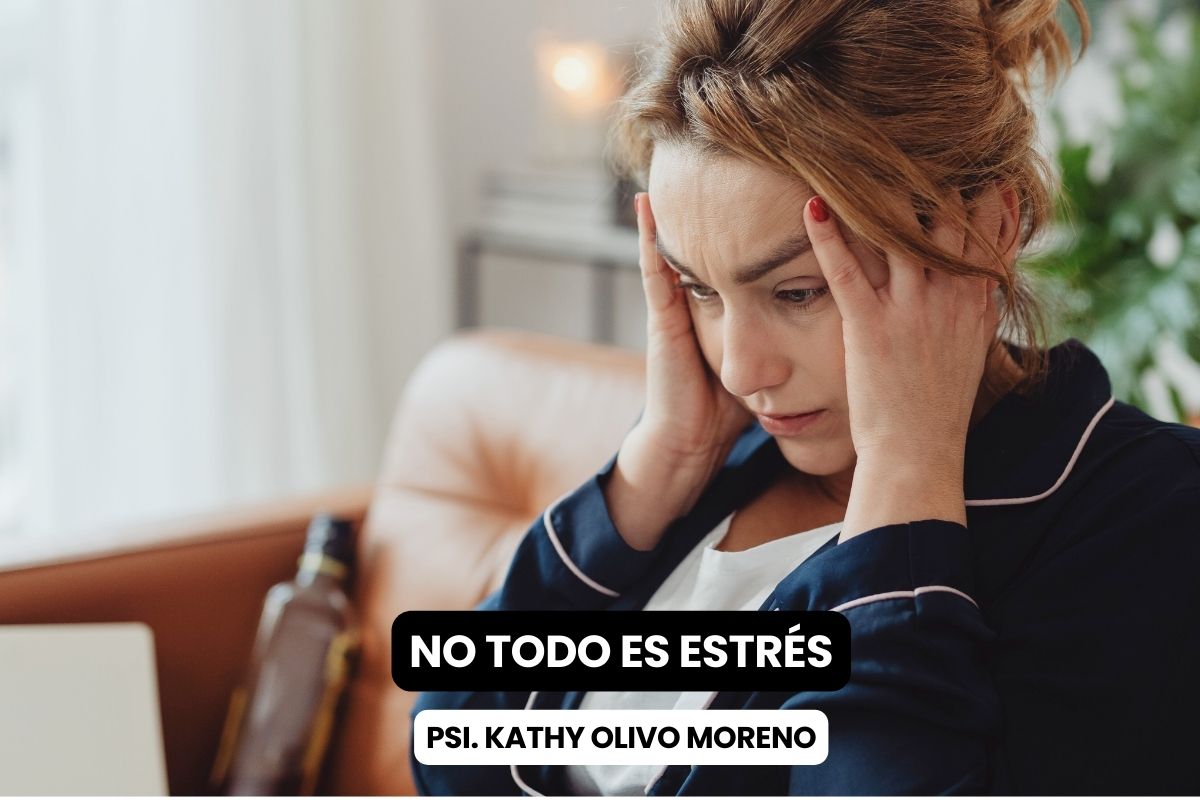
Nowadays, many people tend to normalize emotional exhaustion, everyday stress, or unpleasant emotions that appear frequently. It is common to hear phrases such as “I'm just stressed,” “it's not a big deal,” or “it will pass.” However, this does not mean that these feelings should always be ignored. From a professional perspective, what seems like ordinary stress can sometimes hide important signals about our emotional well-being. If you are interested in learning how to recognize when emotional discomfort may be a sign of something deeper that requires attention, I invite you to read the following article.
Normalizing exhaustion and minimizing emotions
In a fast-paced world that constantly demands productivity, stress seems to have become a universal explanation for almost any emotional discomfort. But what if that “stress” were actually something more? In many situations, what we call stress may actually be the way our mind and body are trying to tell us that something is not right. Emotions, far from being an obstacle, are important signals about our psychological well-being. They do not appear randomly; instead, they serve a real purpose in every human being: they help us identify needs, limits, and adapt to different situations.
But let's be honest: nowadays feeling overwhelmed, exhausted, or constantly worried has become so common that many people consider it a normal part of life. Because of this, there is a strong tendency to normalize emotional exhaustion and minimize the real function of our emotions, making it difficult to truly connect with them.
Why does this happen? Very often, work demands, personal responsibilities, social expectations, and the pressure to “handle everything” make us minimize what we feel. However, when emotional distress persists over time, ignoring it, avoiding it, or trying to escape from it rarely makes it disappear. On the contrary, it may intensify it.
Everyday stress or a warning sign?
Stress itself is not necessarily negative. In fact, there are two types of stress: eustress and distress. The first one is a natural response of the body to challenges or demanding situations. In this sense, moderate stress can be positive because it motivates us to react, focus, and solve problems.
However, when stress becomes chronic, constant, threatening, or overwhelming and begins to affect different areas of life, it may become a sign that something deeper is happening. This is what we refer to as distress or negative stress. The key to distinguishing between them lies in observing the duration, frequency, intensity, and impact of emotional discomfort.
If worries persist even after the stressful situation has passed, emotional exhaustion becomes permanent, or emotions start interfering with daily life, it is possible that it is no longer just everyday stress.
5 signs that your emotional health may need attention
Sometimes the signs are subtle. Other times they appear more clearly. Some of the most common include:
- Constant emotional exhaustion: Feeling mentally drained even after resting.
- Repetitive thoughts or constant worries: The sensation that the mind cannot “switch off.”
- Irritability or frequent mood changes: Emotional reactions that feel stronger than usual.
- Loss of interest in activities once enjoyed: Things that used to be pleasurable begin to feel indifferent or burdensome.
- Changes in sleep or appetite: Difficulty sleeping, waking up frequently during the night, or changes in eating habits.
These signs do not necessarily mean that there is a structured psychological disorder, but they may indicate that something requires attention and care.
Emotional awareness: a skill that can be learned
For a long time, emotions were viewed as something that had to be controlled or ignored. However, evidence-based psychology shows that recognizing and understanding them is a fundamental skill for well-being. Emotions function as an internal guidance system. They help us identify what situations affect us, what we need, and what changes might be necessary in our lives.
Listening to them and giving them space does not mean being controlled by them. Instead, it means learning to interpret and manage them, developing more functional and adaptive coping strategies in life.
Sometimes it is enough to pause, ask ourselves what is happening internally, or talk to someone we trust. At other times, it may be helpful to seek guidance from a mental health professional.
Asking for help is also self-care
Despite advances in mental and emotional health awareness, many people still hesitate to seek psychological help. Some believe their discomfort “is not serious enough,” while others feel they should be able to handle it on their own. However, asking for support is not a sign of weakness. On the contrary, it is a brave and conscious act of self-care.
When emotional distress persists over time, affects daily life, or creates a sense of being overwhelmed without resources to cope with it, speaking with a professional can provide tools, strategies, clarity, and support throughout the process.
“Emotions are not an obstacle that we must eliminate, but a valuable source of information about our well-being. Listening to them in time can help us make healthier decisions for our lives.”
Kathy Olivo Moreno
Clinical Psychologist, Specialist in Clinical Evaluation and Treatment of
Emotional and Affective Disorders.
If you are experiencing constant stress, emotional exhaustion, or difficulty managing your emotions, Dr. Kathy Olivo Moreno, psychologist in Bogotá, offers professional psychological evaluation and treatment. Schedule a consultation to receive specialized support and improve your emotional well-being and quality of life.

Medical Tourism in Colombia: Health and Relaxation in One Trip!
Experience the best of medical tourism in Colombia with personalized care, top specialists, and competitive prices. Combine health and travel in a single destination!
More InformationHealthcare by City
Discover the top doctors and dentists in Colombia's major cities.