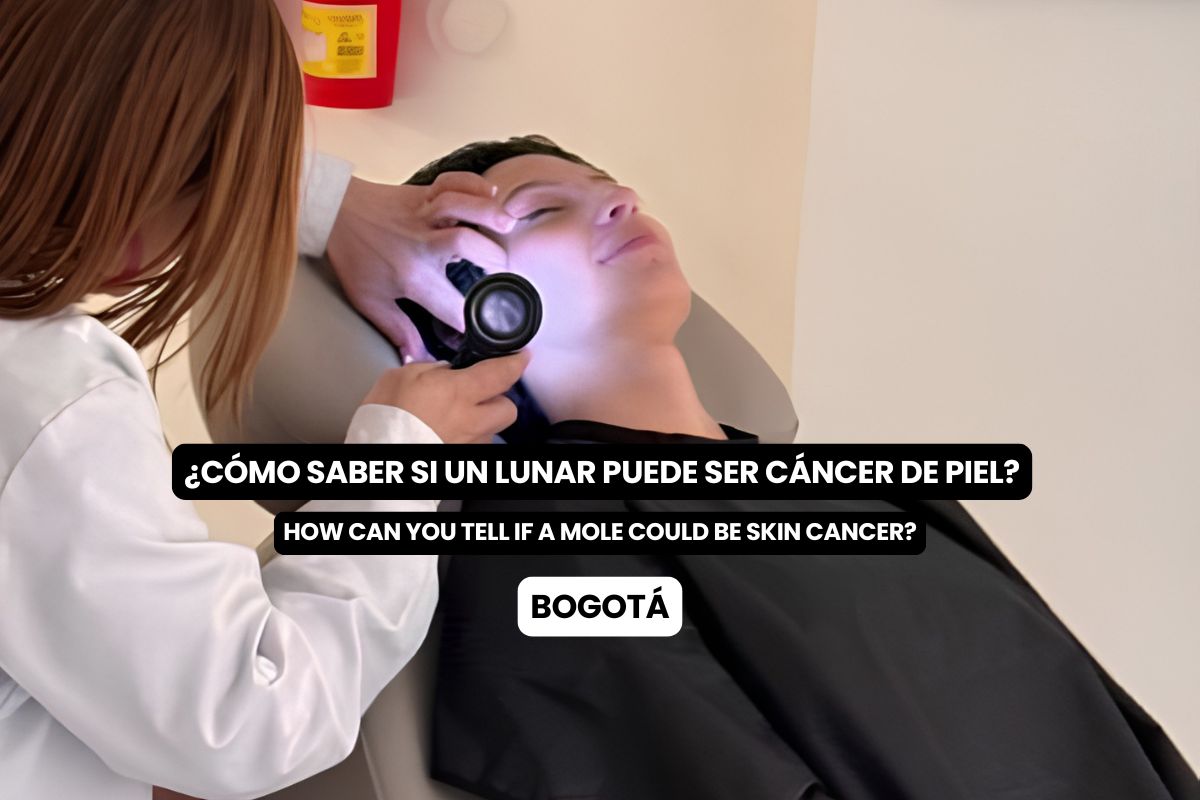
How to Tell if a Mole Could Be Skin Cancer: Dr. Laura Habib, Dermatologist in Bogotá, Explains the Warning Signs
It is normal for new moles to appear over the years or for existing moles to change slightly in size, color, or appearance. However, some changes may also be warning signs of melanoma, the most serious type of skin cancer.
The good news is that when melanoma is detected early, treatment can be highly effective. Learning how to recognize changes that may require medical attention can make an important difference.
Dr. Laura Habib, dermatologist in Bogotá, explains which mole changes may be normal, when you should be concerned, and who may have a higher risk of developing skin cancer.
Is It Normal for New Moles to Appear?
Yes. Many people believe that moles only appear during childhood, but new moles can continue to develop and existing ones may change during early adulthood.
This can be influenced by factors such as:
- Genetics.
- Hormonal changes.
- Cumulative sun exposure.
For this reason, the appearance of a new mole does not automatically mean that there is a problem. What is important is to watch for suspicious changes or unusual characteristics.
When Could a Mole Be a Sign of Melanoma?
Although most moles are benign, melanoma can develop in an existing mole or appear as a new lesion on the skin.
You should consider seeing a dermatologist if you notice that a mole:
- Changes rapidly in color.
- Grows quickly.
- Has irregular borders.
- Contains multiple colors.
- Bleeds.
- Causes persistent itching.
- Changes significantly in appearance.
Not all of these changes mean cancer, but they may justify a professional skin evaluation.
The ABCDE Method: A Simple Guide for Checking Your Moles
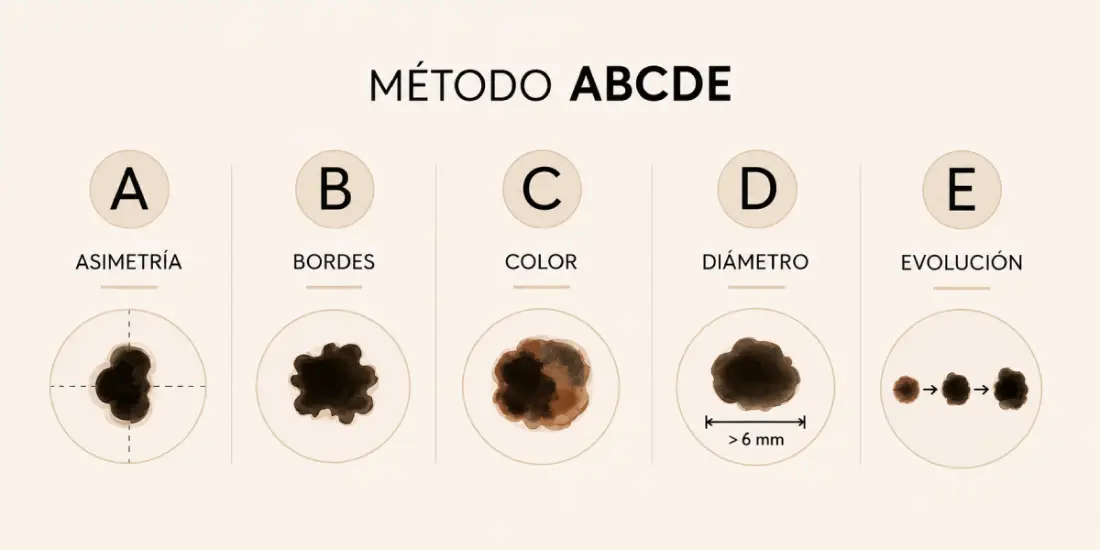
One of the best-known ways to identify mole changes that may require a dermatological evaluation is the ABCDE method. This guide focuses on five characteristics: Asymmetry, Border, Color, Diameter, and Evolution.
A – Asymmetry
A mole in which one half looks different from the other may be a warning sign.
B – Border
Pay attention to moles with irregular, uneven, notched, or poorly defined borders.
C – Color
A mole with different shades or colors, especially combinations of brown, black, red, blue, or white, should be evaluated.
D – Diameter
Traditionally, a mole larger than 6 millimeters has been considered a possible warning sign. However, melanoma can also be smaller, so size should not be evaluated on its own.
E – Evolution
Evolution is one of the most important signs. If a mole changes over time in size, shape, color, or texture, or begins to itch or bleed, it is advisable to consult a dermatologist.
The ABCDE method cannot diagnose melanoma on its own. It is simply a tool that can help identify changes that may require professional evaluation.
Who Has a Higher Risk of Developing Skin Cancer?
Some people may benefit from more frequent dermatological checkups.
Higher-risk groups may include people who:
- Have a personal history of skin cancer.
- Have a family history of melanoma or other skin cancers.
- Have experienced severe sunburns, especially during childhood.
- Are frequently exposed to sunlight through work or recreational activities.
- Use tanning beds or tanning devices.
- Have more than 50 moles.
If you belong to one of these groups, ask your dermatologist how often you should have your skin examined.
I Have Many Moles. Should I Be Worried?
Not necessarily.
Many people naturally have or develop a large number of moles throughout their lives without this indicating a disease.
However, having a high number of moles may be associated with an increased risk of melanoma. Regular skin examinations can help monitor changes and support early detection.
Can Red Moles Be Skin Cancer?
This is a common question during dermatology consultations.
Red moles are often small vascular lesions known as cherry angiomas, which are generally benign. However, any new skin lesion or one that changes in appearance should be evaluated by a healthcare professional.
They may appear due to factors such as:
- Pregnancy.
- Hormonal or metabolic changes.
- Aging.
How Can You Help Prevent Skin Cancer?
Although not every case of skin cancer can be prevented, certain habits may help reduce the risk.
- Use sunscreen regularly.
- Seek shade and practice proper sun protection.
- Avoid prolonged sun exposure.
- Wear hats, sunglasses, and protective clothing.
- Avoid tanning beds.
- Check your skin regularly for new or changing lesions.
- See a dermatologist if you notice suspicious changes.
Prevention and early detection remain important tools for protecting skin health.
When Should You See a Dermatologist in Bogotá for a Mole?
If you notice that new moles are appearing, an existing mole has changed in color, size, or shape, or you simply have concerns about a lesion on your skin, it is advisable to consult a specialist.
A timely skin examination can provide reassurance and help identify changes that may require further evaluation.
Dr. Laura Habib, dermatologist in Bogotá, provides specialized dermatological evaluations for moles, skin lesions, skin cancer detection, and other dermatological conditions.
If you have noticed changes in a mole or would like a preventive skin examination, schedule a specialized consultation.
Medical Tourism in Colombia: Health and Relaxation in One Trip!
Experience the best of medical tourism in Colombia with personalized care, top specialists, and competitive prices. Combine health and travel in a single destination!
More InformationHealthcare by City
Discover the top doctors and dentists in Colombia's major cities.