Assisted Reproductive Techniques (ART) explained by Dr. Yeisman Pineda
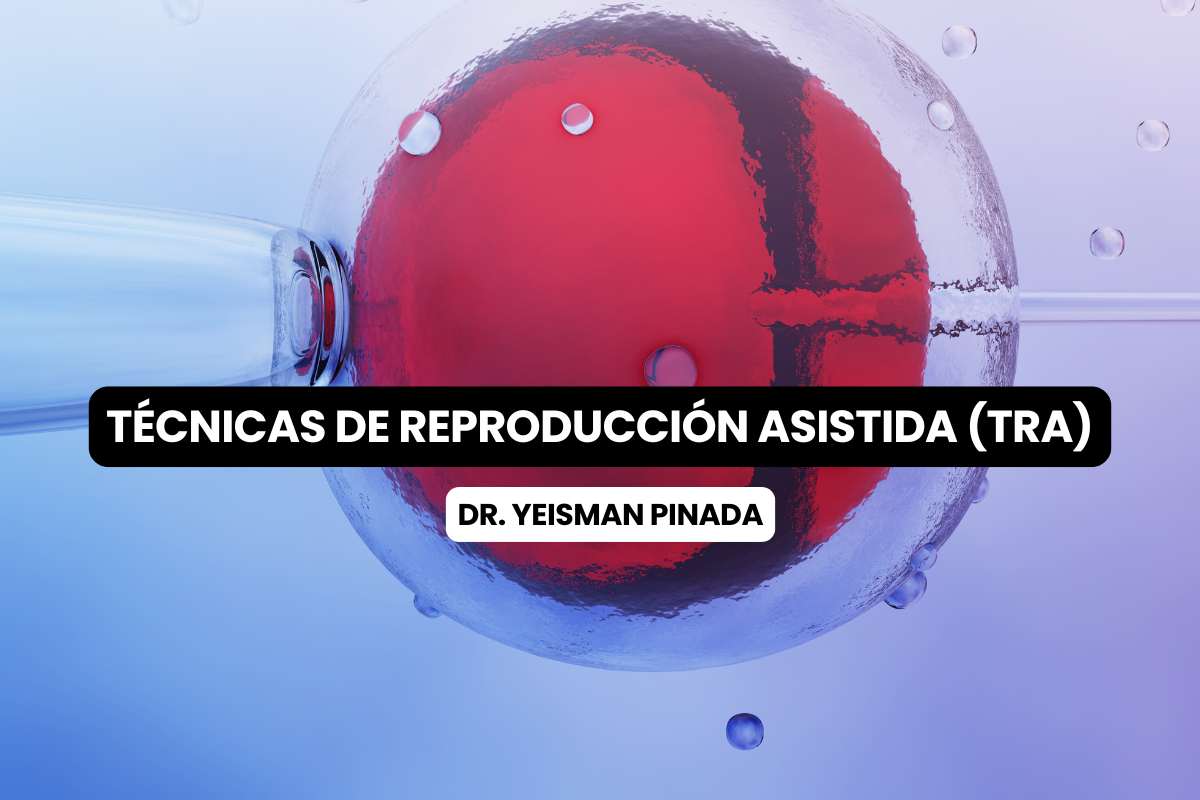
Gynecologist Yeisman Pineda, a fertility specialist based in Barranquilla, explains that Assisted Reproductive Techniques (ART) refer to “any procedure involving the manipulation of oocytes, sperm, and embryos with the goal of achieving pregnancy.” These techniques have revolutionized infertility treatment, offering hope to thousands of couples seeking to build a family. In this article, Dr. Pineda walks us through the main available options—from simpler methods like timed intercourse to high-complexity procedures such as In Vitro Fertilization (IVF) and Intracytoplasmic Sperm Injection (ICSI).
Timed Intercourse (TI)
Assisted Reproductive Techniques (ART) have undergone many advancements, resulting in notable improvements in both their effectiveness and complexity in recent years. However, sometimes a small intervention, such as timed or programmed intercourse, may be enough for treating infertile couples. This simple procedure can be the first and only solution in cases where pregnancy has not been achieved.
Timed intercourse is the first therapeutic step in fertility. Usually, only a basic evaluation of the couple is performed, including assessment of tubal status and hormonal levels.
For the best results, the woman should be under 35 years old, have patent fallopian tubes, and the male partner's semen should fall within normal parameters.
INDICATIONS:
- Short-term infertility (less than 2 years)
- Young women (under 35 years)
- Anovulatory patients
- No abnormalities in semen analysis
- Unexplained infertility
- Mild endometriosis (with patent tubes)
How is timed intercourse (TI) performed?
The goal of timed intercourse is to concentrate the couple’s sexual activity during the woman’s most fertile days. To do this, ovulation is monitored via ultrasound to determine the exact ovulation time. This technique can be performed in three ways: during the natural cycle, with ovulation induction, or with ovarian stimulation. Below is an explanation of each approach.
Natural cycle and spontaneous ovulation:
STEP ONE: If the woman has regular menstrual cycles, it is expected that in each cycle a follicle will grow in one of the two ovaries (larger than 18mm). This growth is monitored via ultrasound, which also helps predict the ovulation day.
STEP TWO: Once the ovulation time is identified, the couple is instructed to have sexual intercourse starting on that date.
STEP THREE: A follow-up ultrasound is done to confirm ovulation. If confirmed, progesterone is prescribed to support the pregnancy.
STEP FOUR: A pregnancy test is ordered.
Natural cycle with ovulation induction:
STEP ONE: Similarly, if the woman has regular menstrual cycles, follicle growth is expected and monitored via ultrasound.
STEP TWO: Once the follicle reaches the appropriate size (18–20mm), a specific medication (hCG) is administered to trigger ovulation.
STEP THREE: After administering the medication, ovulation is expected to occur about 36 hours later. The couple is then instructed to have sexual intercourse.
STEP FOUR: A follow-up ultrasound is performed to confirm ovulation. If confirmed, progesterone is prescribed to support the pregnancy.
STEP FIVE: A pregnancy test is ordered.
Cycle with ovarian stimulation:
In special cases, slight ovarian stimulation is required to aid in follicle growth.
STEP ONE: Ovarian stimulation begins within the first days of menstruation, typically between days 3 and 5 of the cycle. The type and dosage of medication used is based on the individual patient’s characteristics.
STEP TWO: Once the follicle reaches the appropriate size (18–20mm), a specific medication (hCG) is administered to trigger ovulation.
STEP THREE: After administering the ovulation-inducing medication, ovulation is expected to occur 36 hours later. The couple is then instructed to have sexual intercourse.
STEP FOUR: A follow-up ultrasound is performed to confirm ovulation. If confirmed, progesterone is prescribed to support the pregnancy.
STEP FIVE: A pregnancy test is ordered.
When should a timed intercourse cycle be canceled?
If, due to the administration of medication, more than three sizable follicles (approximately 16mm or larger) develop, the cycle must be canceled to avoid the risk of multiple gestation (three or more babies). For the same reason, it is recommended that the couple avoid intercourse during that cycle.
HIGH-COMPLEXITY ASSISTED REPRODUCTIVE TECHNIQUES
In Vitro Fertilization (IVF):
In vitro fertilization, IVF (or FIV in Spanish), is the conventional technique aimed at creating a human embryo by fertilizing an oocyte with a mature sperm in a culture medium (outside the mother's body), and later transferring it into the uterus to develop into a pregnancy. IVF is the primary treatment for infertility when other assisted reproductive methods have not been successful.
When is IVF indicated?
The main indications for IVF are:
- Tubal obstruction
- Premature ovarian failure
- Severe endometriosis, when previous treatments have failed
- Moderate male factor infertility
- Unexplained infertility
- Failed intrauterine inseminations
- Preimplantation Genetic Diagnosis (PGD)
Intracytoplasmic Sperm Injection (ICSI)
Fertilization of oocytes can also be performed using another technique called Intracytoplasmic Sperm Injection (ICSI). In this technique, a single sperm is directly injected into the cytoplasm, penetrating the zona pellucida.
ICSI is primarily used in cases of male infertility factors, such as low sperm concentration (azoospermia, oligozoospermia), poor sperm motility, history of vasectomy, infectious disease (HIV, hepatitis), immunological infertility, or when ejaculation under normal conditions is not possible.
How is IVF or ICSI performed?
In vitro fertilization (IVF) or ICSI require similar steps, differing only at the moment of fertilization in the laboratory. To better understand how IVF/ICSI works, here are the steps described:
- STEP ONE: Ovarian stimulation. In this phase, hormonal medication is administered via subcutaneous injections to stimulate the ovaries to produce as many good-quality oocytes as possible. The type and dosage of medication are determined based on the patient’s specific condition.
- STEP TWO: Follicular monitoring and induction of oocyte maturation. During stimulation, follicular growth is monitored via ultrasound to determine when the follicles reach a suitable size (greater than 18mm), at which point a specific medication (hCG) is administered to ensure oocyte maturation. Additionally, another medication is given to prevent ovulation until the day of follicle retrieval.
- STEP THREE: Follicular aspiration. 36 hours after administering the maturation trigger, follicular aspiration is performed. Under vaginal ultrasound guidance and sedation, the ovaries are punctured to extract the fluid from the follicles, which is then analyzed in the lab to retrieve the oocytes.
After the procedure, the patient remains at rest for one or two hours and can then return home. No strict rest is needed afterward, but strenuous activities should be avoided. - STEP FOUR: IVF/ICSI fertilization. Once the oocytes are retrieved and sperm is available (from a partner or donor), insemination of the oocytes is performed. The resulting embryos are monitored daily in the lab and classified based on morphology and division quality.
- STEP FIVE: Embryo transfer. Once embryos are obtained, they are transferred into the uterus. This may occur in the same cycle or, in some cases, the embryos are cryopreserved and transferred in a later cycle.
- STEP SIX: Pregnancy test. A quantitative blood pregnancy test (BHCG) is performed.
- STEP SEVEN: Vitrification of remaining embryos. Embryos not used in the transfer are cryopreserved (vitrified) in the lab for potential use in future cycles.
If you are interested in any of these Assisted Reproductive Techniques and are located in Barranquilla, Cartagena, Santa Marta, Riohacha, or Montería, feel free to contact Dr. Yeisman Pineda. With extensive experience in comprehensive fertility care, Dr. Pineda will guide you through every step of the process to help you achieve your dream of becoming a parent.
Medical Tourism in Colombia: Health and Relaxation in One Trip!
Experience the best of medical tourism in Colombia with personalized care, top specialists, and competitive prices. Combine health and travel in a single destination!
More InformationHealthcare by City
Discover the top doctors and dentists in Colombia's major cities.