Alopecia treatment in Colombia, stop hair loss
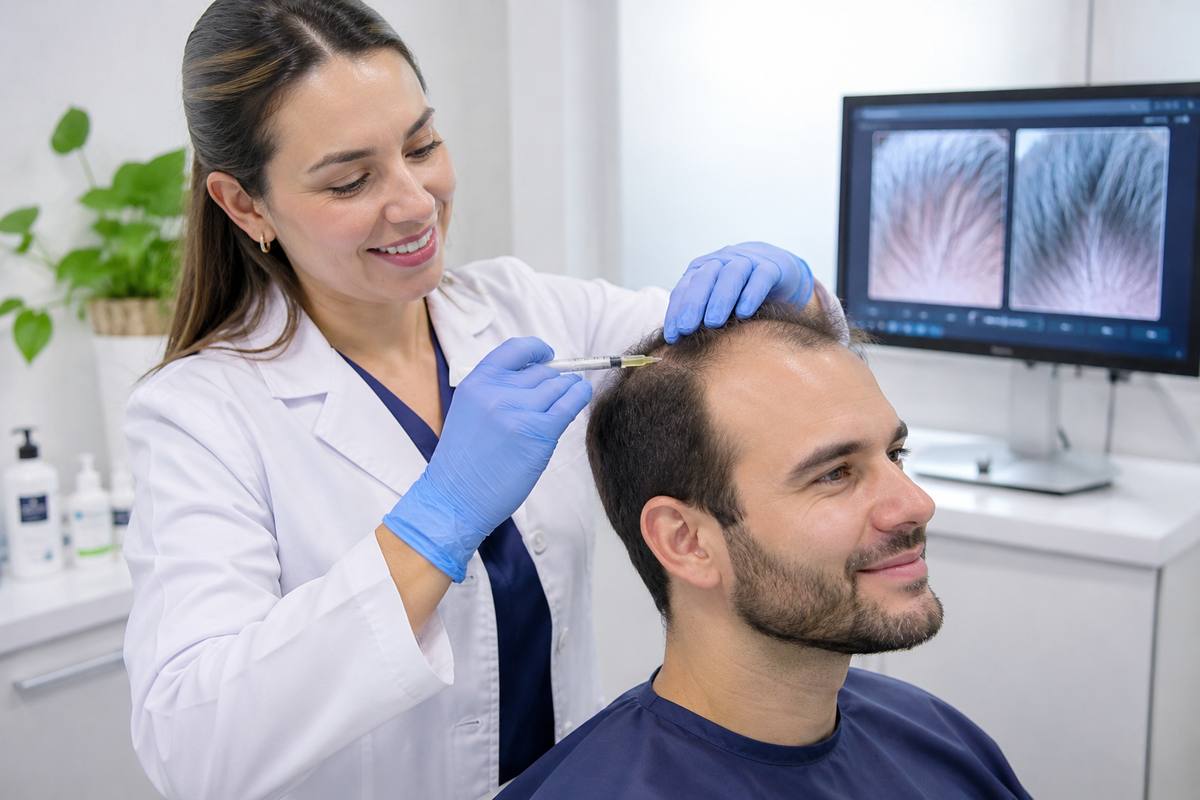
Alopecia is a common condition that affects many people around the world. It is characterized by abnormal hair loss, either in certain areas of the scalp or across the entire scalp. In Colombia, this condition is also very common and affects both men and women.
The good news is that today there are effective treatments to stop hair loss and, in many cases, restore hair density. The key is to identify the type of alopecia and its cause early, because the right treatment depends on the diagnosis.
Most common types of alopecia
- Androgenetic alopecia: the most common type. In men, it usually appears as a receding hairline and thinning at the crown; in women, as diffuse thinning on the top of the head. It has a genetic and hormonal component.
- Alopecia areata: appears as round, hairless patches. It is autoimmune in origin and can occur at any age.
- Telogen effluvium: diffuse, temporary hair shedding that usually appears weeks or months after a stressful event, an illness, surgery, childbirth, or a strict diet.
- Traction alopecia: caused by hairstyles that constantly pull on the hair, such as braids, tight ponytails, or extensions.
- Scarring alopecia: less common, it occurs when inflammation destroys the hair follicle. It requires early diagnosis and treatment to prevent permanent hair loss.
What are the treatments for alopecia in Colombia?
The best-supported treatments for alopecia in Colombia are:
- Topical and oral medications: minoxidil and, in some cases, finasteride or other medications are the most commonly used treatments for androgenetic alopecia. They must be prescribed by a doctor, as they are not suitable for everyone.
- Corticosteroids: for alopecia areata, a dermatologist may prescribe topical corticosteroids or inject them into the affected areas to stimulate hair growth.
- Platelet-rich plasma (PRP): uses the patient's own plasma to stimulate the hair follicles and improve hair density. It usually requires several sessions.
- Scalp mesotherapy: involves applying active ingredients to the scalp that nourish and stimulate the follicle, as a complement to other treatments.
- Low-level laser therapy: uses low-power light to stimulate hair growth on the scalp. It can be done in the office or with at-home devices.
- Hair transplant: one of the best options for advanced alopecia. It involves extracting follicles from a donor area, usually the back of the head, and implanting them in the affected areas. The most widely used technique today is FUE.
Vitamin supplements, such as biotin or iron, may help when a deficiency has been confirmed through lab tests, and scalp massages or lotions can be used as a complement. However, on their own, they are usually not enough to treat established alopecia.
In Colombia, it is important to see a doctor before starting any treatment for alopecia. It is also essential to follow your healthcare provider's instructions and avoid self-medicating.
How much does alopecia treatment cost in Colombia?
The cost of alopecia treatment in Colombia can vary depending on the type of treatment and the severity of the condition. Each case is unique, and the final price depends on several factors, such as the length of treatment, the medications used, the number of sessions, and the technique applied.
As a reference, prices can range from around COP 50,000 for lotions to more than COP 10,000,000 for hair transplant surgery. It is best to consult a specialist for an evaluation and a personalized quote.
Which specialists treat alopecia in Colombia?
Dermatologists are the specialists who treat alopecia. They can make an accurate diagnosis, including with tools such as trichoscopy, and recommend the best treatment for each case. They can also advise you on how to properly care for your scalp and prevent future hair loss.
Aesthetic medicine doctors or plastic surgeons can also be an option for treating alopecia, especially for treatments such as platelet-rich plasma or hair transplants. However, it is important to make sure they are properly trained and certified in these procedures.
In some cases, you may need to see an endocrinologist or a nutritionist if your hair loss is suspected to be caused by a hormonal imbalance, a thyroid problem, or a nutritional deficiency.
If you think you may be experiencing alopecia, it is important to see a doctor as soon as possible to receive the right treatment. For most types of alopecia, the earlier it is treated, the better the results. In addition, if you have a family history of alopecia, regular checkups with a specialist are recommended to detect any early signs and take preventive measures.
Who are the best alopecia specialists in Colombia?
Colombia has many highly qualified and experienced doctors who treat alopecia. Some of the most outstanding are:
Alopecia specialists in Bogotá
Alopecia specialists in Barranquilla
- Dr. Bernardo Huyke
- Dr. Luz Herrera
- Dr. Erika Ariza
- Centro Médico Estético Carmen J. Guerra
- Dr. Kenneth Morillo
Alopecia specialists in Cali
- Dr. Silvia Perafán. Read her article on infrared therapy for alopecia (in Spanish).
Before and after alopecia treatments
See real results from patients treated by specialists in Colombia:
Conclusion
Alopecia is a common condition that can affect both men and women, but it doesn't have to be permanent. Today there are medical treatments, in-office procedures, and surgical options that can stop hair loss and restore density, especially when action is taken early.
It is important to see a specialist to determine the cause of your alopecia and find the best treatment for you. In addition, a healthy lifestyle, with good nutrition, rest, and stress management, can improve not only the health of your hair but also your overall well-being.
Book an appointment with an alopecia specialist
Medical Tourism in Colombia: Health and Relaxation in One Trip!
Experience the best of medical tourism in Colombia with personalized care, top specialists, and competitive prices. Combine health and travel in a single destination!
More InformationHealthcare by City
Discover the top doctors and dentists in Colombia's major cities.